

Wisdom Tooth Extractions Georgia
Remove Unnecessary Third Molars

Centuries ago, our ancient ancestors relied on the arrival of their third molars to replace teeth that had become worn down due to their primitive diets. Today, however, thanks to our much smaller jaws and modern food preparation methods, these spare teeth are largely unnecessary. In fact, they can often cause a variety of oral health problems that make them a liability to keep. At Georgia Periodontics, we are pleased to offer wisdom tooth extractions to reduce the risk of damage to your existing teeth and create more room in your healthy, beautiful smile.
Why Choose Georgia Periodontics for Wisdom Tooth Extractions?
- Gentle & Compassionate Periodontal Team
- Dental Insurance Welcome
- Sedation Options Available
What Are Wisdom Teeth?
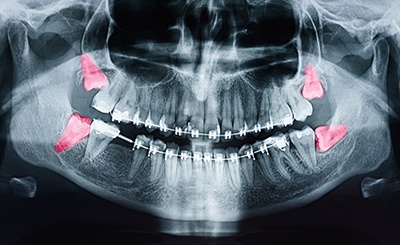
Wisdom teeth, or third molars, are the teeth that arrive in the very back of your arches in your late teens to early 20’s. Although they once served a noble purpose to our early ancestors, today they can be very problematic due to our much smaller jaws.
Although many people are born with four wisdom teeth, it is not uncommon to have one, two, three, five, or even six! In some cases, they may pose no risk whatsoever, and they can remain intact. However, in other situations, removing them can help prevent a variety of oral health problems including gum disease, impaction, crowding, and even damage to nearby teeth.
Why Do Wisdom Teeth Need to Be Removed?

While not always the case, wisdom teeth can sometimes pose a serious threat to your oral health and should be removed as soon as possible. Some of these issues include overcrowding, oral hygiene problems, severe discomfort, impaction, cysts and tumors, and even possible jawbone damage.
If you are experiencing any uncomfortable symptoms like pain while chewing, jaw stiffness, facial swelling, bad breath, or difficulty opening and closing your mouth, it could be time to have your wisdom teeth extracted.
What to Expect from the Wisdom Teeth Procedure

In most cases, your wisdom teeth can be removed with dental forceps and an elevator if they have already erupted through your gums. However, if they are impacted, this procedure will look a bit different. Surgical removal requires your periodontist to make incisions in the gums and then extract the impacted teeth from below the gumline, closing the sockets with sutures.
Recovering From Wisdom Teeth Extractions

Following wisdom tooth extractions, you may experience the following side effects, which are completely normal and should subside within several days:
- Temporary facial swelling.
- Bleeding from the incision sites.
- Difficulty chewing or opening and closing the mouth.
- General discomfort.
Thankfully, these symptoms are temporary, and will begin to improve after about three days, taking up to a week to feel ‘back to normal.’
While recovering from wisdom tooth surgery, it is very important that you maintain an excellent oral hygiene routine, including rinsing your mouth, brushing your teeth regularly, and avoiding contact with the incision sites.
To prevent the painful condition known as dry socket, do not touch the clots that form in your incision sites with your fingers, tongue, or toothbrush. It is also important that you do not drink from a straw or consume any carbonated beverages until your periodontist has given you the green light, as these activities can also loosen the clot.
Maintain a soft diet for the first two or three days after your procedure, and take any prescribed medications as directed.
If you lose a clot, your pain worsens instead of improving, or if you have any other questions or concerns, please don’t hesitate to contact us for assistance.