Dental implants are in a class of their own when it comes to replacing missing teeth. This leading-edge treatment is the only solution that restores both the crown and root structures of missing teeth, allowing you to enjoy a prosthetic that doesn’t just look natural, but also feels natural. Whether you’re missing one, several, or all of your teeth, our periodontists can complete the dental implant placement in-house, streamlining your journey toward a full and healthy smile. Call us today to schedule a consultation and learn whether you’re a good candidate for dental implants in Georgia!
Why Choose Georgia Periodontics for Dental Implants?
Periodontists with 25+ Years of Experience
Also Offering Gum Grafting & Sinus Lifts
State-of-the-Art Periodontal Office
What Are Dental Implants?
Dental implants are small titanium posts that are designed to be secured within the jawbone, underneath the gumline. Due to their biocompatible nature, they’re able to fuse with the bone through a process called osseointegration, which allows them to provide stimulation and blood flow to the area to keep it from eroding over time, as well as offer an unwavering foundation for a restoration to be attached to.
The 4-Step Dental Implant Process
Dental implants are the best tooth replacement option out there. They are the only solution that replaces the roots of the missing teeth, allowing for a wide range of benefits. To achieve this, getting dental implants requires a multi-step process that takes place over the course of several months. Continue reading to learn more about these steps so you know what to expect.
Initial Dental Implant Consultation
The first step of every dental implant treatment is a consultation with a dentist. During this visit, they will help you determine whether dental implants are right for you. Some patients require preliminary treatments, like bone grafting or gum disease treatment, before they can get dental implants. If this applies to you, we will help to get those scheduled. Once your jaw and gums are in good condition, we can move on to the next step of your treatment.
Dental Implant Surgery
Once you decide you want to move forward with getting dental implants, our team will schedule your surgery at one of our Georgia Periodontics locations. Dr. Litterer and Dr. Scher are specially trained in this procedure, allowing them to provide the best results and most comfortable experience possible.
Dental Implant Osseointegration & Abutment
For the next three to six months, your gums will heal, and the implants will undergo a process called osseointegration, where they fuse with the jawbone. This is what makes your implants so stable and long-lasting. Once the area has healed, you will need to undergo another minor procedure in which the abutments are attached. Impressions are taken and sent to the dental lab so your final restoration can be made.
Delivery of Dental Implant Restoration(s)
When your final restorations are ready, they will be sent to your dentist. Then, you’ll return to your general dentist so they can place your new teeth on your dental implants via the abutments. If everything looks and feels great, you can leave showing off your new, complete smile!
Benefits of Dental Implants
Dental implants in Decatur are such a popular tooth replacement treatment because they offer several benefits that other traditional solutions don’t. We can discuss the advantages more in-depth during your consultation, but feel free to read on if you want to learn a little more on the topic in the meantime.
Day-to-Day Benefits
Fortunately, you won’t have to wait long to enjoy the benefits of dental implants in Georgia. After you’ve healed, you’ll notice several improvements to your daily life, including:
The Ability to Eat a Varied Diet – Since dental implants are inserted directly into your jawbone, they can restore up to 80% of your original bite power. So, you can say goodbye to the days of eating applesauce, yogurt, and other extremely soft foods on repeat.
Easy Maintenance – While some restorations require special cleaning products, dental implants do not! To keep them in pristine condition, all you need to do is brush, floss, and rinse with mouthwash consistently.
Improved Self-Esteem – With noticeable gaps in your smile, it can be difficult to smile confidently. Fortunately, dental implants can replace any number of missing teeth. Plus, the restorations secured on top are custom-made, ensuring they look and feel incredibly lifelike.
Health Benefits
There are a few ways that dental implants can benefit your oral and overall health, including:
Allowing You to Eat Nutrient-Dense Foods – With a strong bite, you can eat seasonal fruits, fresh vegetables, and lean proteins with ease. Not only is this more satisfying than a soft-foods-only diet, but it also ensures your body has the nutrients it needs to stay healthy.
Preventing Dental Drift – Dental drift is when the teeth surrounding the gap move out of position. With dental implants, we can fill the gaps in your smile, helping preserve the alignment of your bite in the process.
Preserving More of Your Healthy Smile – Dental bridges can replace one tooth or several teeth in a row, but they require the teeth surrounding the gap to be altered, even if they are healthy. That’s not the case with dental implants because they are self-supporting.
Long-Term Benefits
Finally, dental implants offer several long-term benefits. Here are a few noteworthy ones:
High Success Rate – Dental implants have a success rate of over 95% with non-smoking patients.
Preserve Your Youthful Face Shape – Dental implants are inserted into your jawbone. Not only does this result in unmatched stability, but it also helps prevent bone loss and the alteration of your facial shape.
Long Lifespan – With proper care and maintenance, like scheduling a dental checkup and cleaning every six months and exercising caution with crunchy foods, dental implants can easily last for 30+ years.
Who Dental Implants Can Help
In addition to being one of the most advanced answers to tooth loss, dental implants are also incredibly versatile, with the ability to help patients in a variety of situations.
Missing One Tooth
For a single missing tooth, our periodontists can place one dental implant below the gumline and into the jawbone. After it has fused with the bone and the abutment has been attached to it, your general dentist will secure a free-standing, custom-crafted dental crown to it to fill the space in your arch.
Missing Multiple Teeth
If you have several missing teeth in a row or throughout your arch, we can secure an implant bridge as well as implant crowns to complete your smile. An implant bridge is anchored within the mouth by placing two dental implants at either side of the gap. This will allow the bridge to be supported by the implants instead of your natural existing teeth, making the procedure more conservative.
Missing All of Your Teeth
To rebuild a smile completely, our team can secure anywhere between four and eight dental implants throughout the jawbone. This will anchor a full denture without the fear of having it slip or shift whenever you eat or speak. Our team is happy to partner with local general dentists to offer All-on-4 and Teeth in a Day, which can bring back an entire row in a single appointment.
Dental implants don’t fail very often, but it’s good to know that your periodontists in Georgia can help if you ever experience complications! Fortunately, failure doesn’t necessarily mean that you’ll have to go without dental implants. Rest assured, we’ll do everything we can to salvage your restoration and save your smile.
Some patients can undergo dental implant placement very soon after their initial consultation. This is often the case
when the gums are healthy and the jawbone is strong enough to support the new teeth. In other cases, preliminary
care is necessary to prepare the mouth to provide a hospitable environment for implants and their restorations. To
give your new smile the best chance of long-term success, our Dunwoody periodontists may perform an
advanced procedure, such as bone grafting or a sinus lift.
Although these surgeries can extend your total tooth replacement timeline, they should not be viewed as obstacles or
hindrances. Indeed, they can greatly reduce the risk of dental implant failure and set you up for a lifetime of
healthier, stronger smiles.
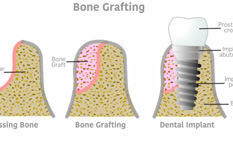
Bone Grafting
Tooth loss, gum disease, injury, and the natural shrinking of the jawbone after an extraction can all reduce the
support needed for a stable implant. Bone grafting seeks to address this issue. It is a procedure that adds or
encourages new bone in an area of the jaw where it is no longer strong enough or thick enough to accommodate your
new prosthetic tooth roots (dental implants).
During treatment, your periodontist will place grafting material (either synthetic or natural bone) in the targeted
area. There are different types of bone grafts, and our team can discuss the details of your procedure before you
commit to it.
Some patients are able to receive a dental implant during the same appointment as a bone graft. In other cases, a
healing period of several months is necessary between the two procedures.
Sinus Lift
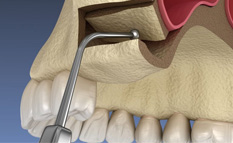
A sinus lift, also called sinus augmentation, is a procedure used when implants are planned for the upper back jaw
and there is not enough bone height beneath the sinuses. If implants are placed when there is insufficient bone,
they can penetrate the sinuses and cause complications.
During a sinus lift, your periodontist will access the sinuses through the upper jaw and gently raise the sinus
membrane before placing bone grafting material in the newly created space. As healing takes place, new bone develops
in the upper jaw, creating a stronger base for future implant placement. There is usually a healing period of 4
– 9 months between a sinus lift and the surgical placement of a dental implant.
Although a sinus lift may sound complex, it is a routine and carefully planned procedure for patients who need extra
support in the upper jaw. Before recommending it, your periodontist will review detailed images of your mouth and
sinuses to determine how much bone is available and where the implant should be placed.
Understanding the Cost of Dental Implants
Many experts in Dunwoody consider dental implants the ideal way to rebuild smiles after tooth loss because of their lifelike strength and resilience. However, they’re also the only replacement teeth that involve surgically placing biocompatible posts directly into your jaw to eventually fuse with the bone, so they often cost more up front than alternative solutions, such as dentures or bridges.
But pricing can vary significantly based on your unique circumstances. Continue reading to learn how cost is determined and how our practice helps make services more affordable!
Preliminary Treatments & Dental Implant Surgery
These lifelike restorations require sufficient jawbone density and healthy connective tissue to support them. Some patients may require additional treatments, such as gum disease therapy or a bone graft, before proceeding with dental implants. You’ll be responsible for paying for any required services needed to improve your condition sufficiently to continue.
The Parts of Your Dental Implant
The total cost of your procedure can also vary based on a few different considerations, such as:
The number of implants you’re receiving. Depending on how many teeth went missing, you might need multiple posts to support your replacements, which can increase the total amount due.
Type of restoration. Dental crowns, bridges, and dentures can all be used to rebuild your smile with the support of dental implants, each with its own pricing structure.
The materials used. Different options, such as titanium or zirconia, can have different associated fees.
How Dental Implants Help Pay for Themselves
Dental implants may cost more initially than other options, like dentures or bridges. However, they also tend to last longer and offer several unique advantages that pay off over time.
For example, because they’re so firmly rooted in your jaw, they’re less likely to become destabilized or dislodged. That means you’re less likely to require expensive repairs or replacements than are often required for other treatments.
Not only that, but there’s no need to regularly invest in additional accessories, such as special brushes, cleaners, soaking solutions, or adhesives to help maintain your restorations, which can help reduce out-of-pocket expenses over the years.
Does My Dental Insurance Cover Dental Implants?
Our office is in-network with Delta Dental and Cigna, and we are happy to work with many other dental insurance plans, but many of them categorize dental implants as a luxury rather than a necessity and don’t cover the cost.
With that said, your plan might include aspects of your treatment, such as your examination or imaging, that can help reduce out-of-pocket expenses. If you’re unsure what might be included, please let us know. Our friendly office staff are happy to help you maximize any available benefits.
Making Dental Implants Affordable
You’re not alone if you’re concerned about affording your treatment, but our compassionate providers believe that everyone deserves access to quality services regardless of their financial situation.
If you’re worried about the cost, you might benefit from a flexible payment package through CareCredit. These no- to low-interest plans allow you to divide your final invoice into more manageable installments over a designated period if your application is approved, which can be easier on your budget.
Dental Implant FAQs
Does Getting Dental Implants Hurt?
Many experts consider this treatment the ideal way to rebuild smiles after tooth loss because, unlike the alternatives, implants are embedded directly into your jawbone. However, many patients hesitate to proceed with this service because they’re afraid their procedure will hurt.
Fortunately, our compassionate team in Georgia understands you may be anxious, and will do everything we can to help ease your frayed nerves. For instance, before starting your procedure, we’ll numb your mouth with a local anesthetic to help you feel more comfortable. We also offer IV sedation to help you get through even the most complex procedures.
Are Dental Implants Removable?
Are you curious whether your new teeth are intended to be frequently removed and reinserted, like dentures? It’s natural to have questions about their functionality, but one of the reasons so many patients choose this treatment is because it’s a much more permanent and reliable solution for tooth loss.
For example, once the support posts positioned in your jaw fuse with the bone material, they are essentially considered a permanent part of your mouth, and can’t be removed. It’s capped with a lifelike restoration made of resilient, tooth-colored ceramic, which is cemented in place and also shouldn’t be taken out except by a professional.
How Successful are Dental Implants?
If you’re worried that you’ll invest time and resources into getting dental implants just for them to fail, you can set your concerns aside. This procedure has an incredibly high success rate of more than 90% when administered by a qualified provider, which means most people won’t develop complications as long as they follow the provided post-operative care instructions. These directions are intended to help you mend as quickly and effectively as possible while avoiding potential problems.
How Long Do Dental Implants Typically Last?
Those seeking a longer-term solution for tooth loss might benefit from getting dental implants thanks to their enhanced longevity. Once your jaw fuses with the support rod in a process called osseointegration, it’s essentially a permanent part of your mouth and can potentially remain in place for the remainder of your natural life.
But the ceramic, tooth-colored restoration attached to your implant might not last quite as long. These resilient replacement teeth are less porous than natural enamel, so they are more resistant to chips, cracks, and discoloration, but they’re not invincible. Although they can last 15+ years if cared for correctly, it’s also possible for them to be damaged and eventually require repair or replacement.